




Aquaculture application --- Outdoor Sensor System (OSS)
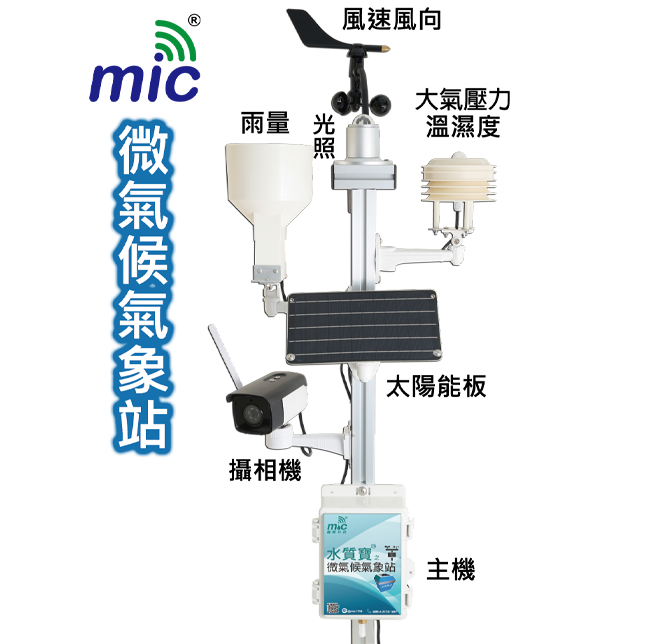
The Outdoor Sensor System (OSS) is specifically designed for precision agriculture applications. It features excellent weather resistance and operational stability, and supports the real-time collection of various types of agricultural data.
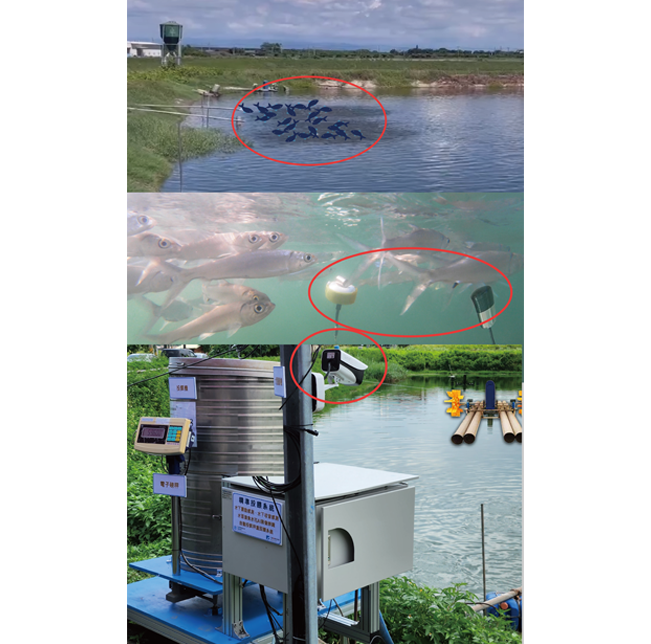
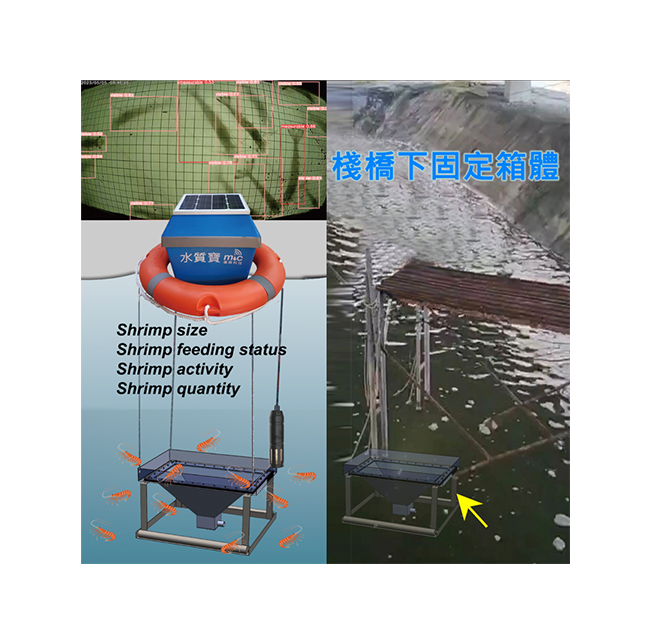
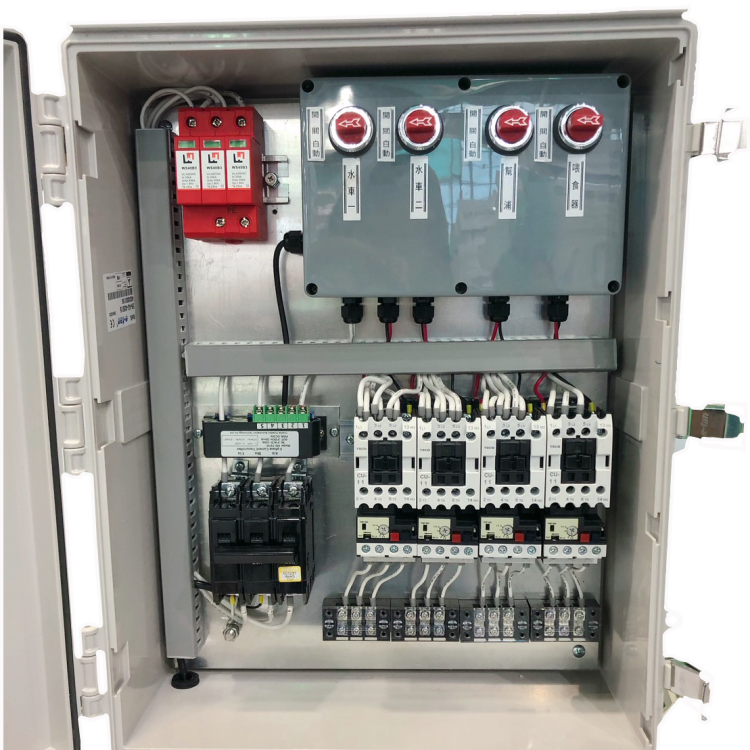
Additionally, OSS is also well-suited for use in crop farming, aquaculture, and livestock farming. To provide accurate sensing the suitable data regarding the customers’ requirements is needed that which can reduce labor and operational costs.
The OSS is highly adaptable and can also be applied in broader fields such as “Smart cities”, “Infrastructure monitoring”, and “Disaster warning and prevention”.
Additionally, OSS is also well-suited for use in crop farming, aquaculture, and livestock farming. To provide accurate sensing the suitable data regarding the customers’ requirements is needed that which can reduce labor and operational costs.
The OSS is highly adaptable and can also be applied in broader fields such as “Smart cities”, “Infrastructure monitoring”, and “Disaster warning and prevention”.
- Company NameTIBBO TECHNOLOGY INC.
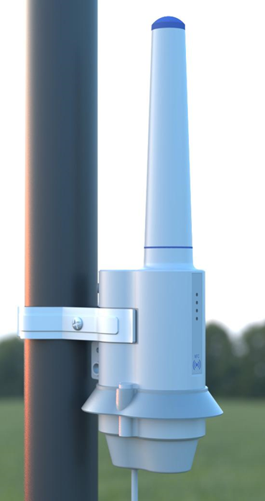
Outdoor Sensor System (OSS)
- Built for Harsh Environments
The OSS is designed for deployment on any flat surface or mounted on a standard 50mm pole. Ideal for outdoor and remote areas, it features IP67/IP68-rated waterproof and dustproof protection, a UV-resistant enclosure, rodent-resistant cabling, and a rain-deflecting skirt for effective water drainage. These rugged features ensure high reliability and low maintenance even in extreme conditions, making OSS especially suitable for urban areas, farmlands, forests, and large-scale distributed sensor networks.
- Built-in or External Sensor Options
The OSS is available in two versions: one with built-in sensors, and one supporting external Modbus sensors.
- The built-in version monitors air-related parameters such as temperature, humidity, PM2.5, and ammonia gas (NH₃).
- The external version supports various soil and water quality sensors. Since Modbus is an industrial standard, virtually all types of sensors can be integrated.
- Flexible Power Options
OSS supports multiple power supply modes:
(1) Industrial-grade long-life built-in battery (1–3 years of operation), which can also power external Modbus sensors under certain conditions.
(2) External power input (12/24V) with pass through capability for powering both the OSS and connected Modbus sensors.
(3) Reverse power: the OSS can be powered by Modbus-connected sensors via the signal cable.
(4) Magnetic charging port for temporary power via power banks.
- Cloud Integration (Azure IoT)
OSS devices can securely upload collected sensor data to the cloud. In addition to centralized data visualization, the cloud platform supports remote device configuration and firmware upgrades. OSS currently supports Microsoft Azure IoT Hub and can also be integrated with other public or private cloud platforms.
- WiFi + LTE Connectivity
The OSS communicates with the cloud via WiFi and cellular (LTE) networks, making it deployable virtually anywhere.
- Android/iOS App Management
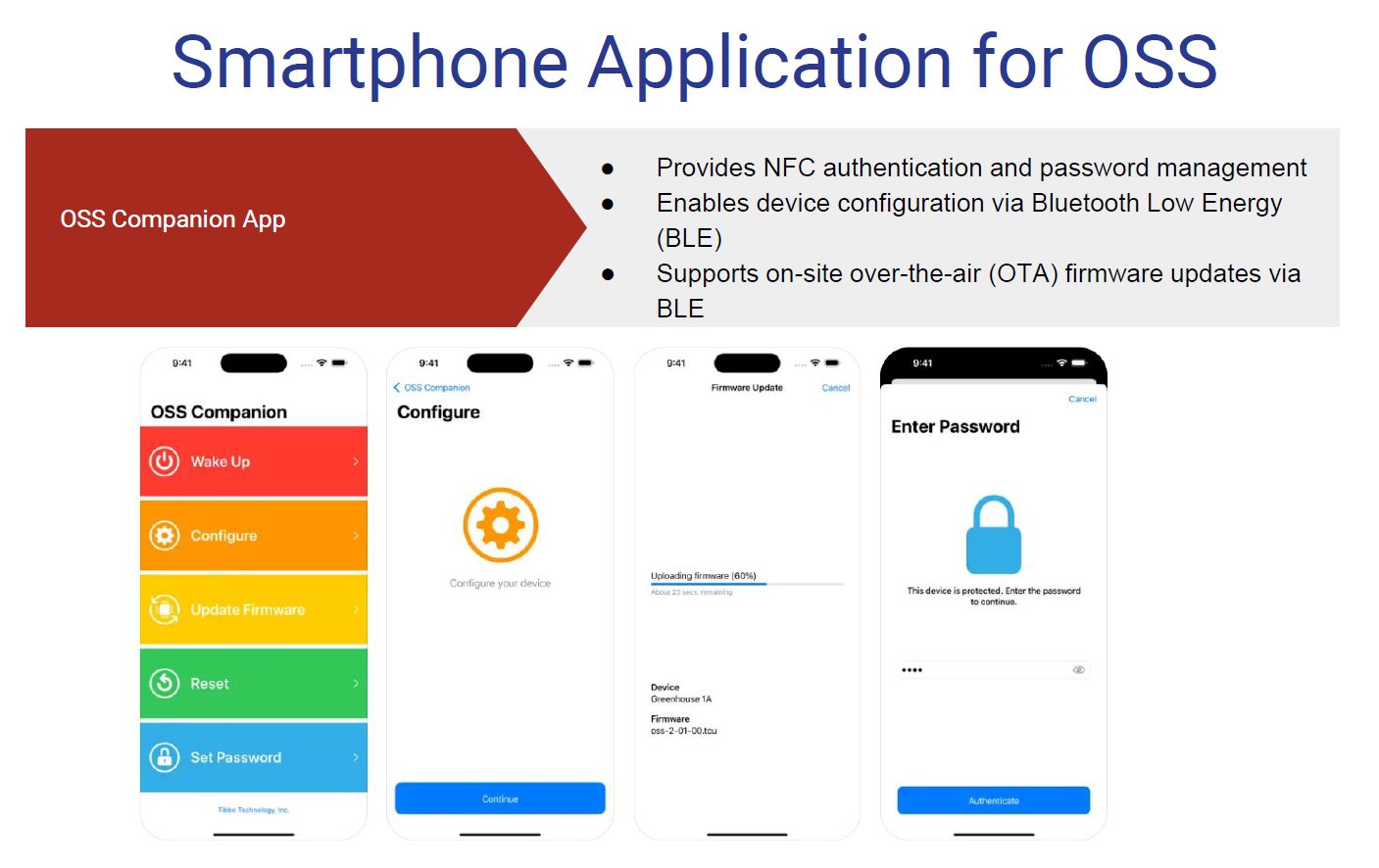
OSS has no physical buttons, preventing unauthorized access. Field configuration is done via the OSS Companion App. After NFC-based secure authentication, setup is completed via Bluetooth.
- Maintenance Convenience
OSS Field maintenance is simple and efficient. Thanks to its modular design, OSS internal components can be accessed by removing only two external screws—with no need to detach the installed unit or disconnect any external wiring.
- Built for Harsh Environments
The OSS is designed for deployment on any flat surface or mounted on a standard 50mm pole. Ideal for outdoor and remote areas, it features IP67/IP68-rated waterproof and dustproof protection, a UV-resistant enclosure, rodent-resistant cabling, and a rain-deflecting skirt for effective water drainage. These rugged features ensure high reliability and low maintenance even in extreme conditions, making OSS especially suitable for urban areas, farmlands, forests, and large-scale distributed sensor networks.
- Built-in or External Sensor Options
The OSS is available in two versions: one with built-in sensors, and one supporting external Modbus sensors.
- The built-in version monitors air-related parameters such as temperature, humidity, PM2.5, and ammonia gas (NH₃).
- The external version supports various soil and water quality sensors. Since Modbus is an industrial standard, virtually all types of sensors can be integrated.
- Flexible Power Options
OSS supports multiple power supply modes:
(1) Industrial-grade long-life built-in battery (1–3 years of operation), which can also power external Modbus sensors under certain conditions.
(2) External power input (12/24V) with pass through capability for powering both the OSS and connected Modbus sensors.
(3) Reverse power: the OSS can be powered by Modbus-connected sensors via the signal cable.
(4) Magnetic charging port for temporary power via power banks.
- Cloud Integration (Azure IoT)
OSS devices can securely upload collected sensor data to the cloud. In addition to centralized data visualization, the cloud platform supports remote device configuration and firmware upgrades. OSS currently supports Microsoft Azure IoT Hub and can also be integrated with other public or private cloud platforms.
- WiFi + LTE Connectivity
The OSS communicates with the cloud via WiFi and cellular (LTE) networks, making it deployable virtually anywhere.
- Android/iOS App Management
OSS has no physical buttons, preventing unauthorized access. Field configuration is done via the OSS Companion App. After NFC-based secure authentication, setup is completed via Bluetooth.
- Maintenance Convenience
OSS Field maintenance is simple and efficient. Thanks to its modular design, OSS internal components can be accessed by removing only two external screws—with no need to detach the installed unit or disconnect any external wiring.
__26B10ZHPH2.png)
__26B10My3ZC.png)