



Prevention is better than cure, introducing the concepts of preventive medicine and nutritional health into crop management
In the promotion of Integrated Crop Management (ICM), the most important is reduce the management cost of crop production, and at the same time improve the quality and yield of crops, let crop producers and eaters get more benefit. To achieve this goal, prevention is necessary in the crop management program.
At present, in terms of human medicine and veterinary medicine, the concept and program of preventive medicine have been formed, preventive medicine is divided into five stages, from neonatal disease prevention to don’t overuse prevention and control agents. And ICM starts from the selection of disease-resistant and healthy seeds, to the detection of soil, to understand the possible nutrient deficiency of crop growth, and the use of bio-stimulants and biochemical stimulants to increase crop resistance to the pests, all of which are similar to preventive medicine, so ICM can be a method that how success to preventive agriculture(PA).
The ICM Enterprise Alliance, comprising JHB Taiwan Corporation, Hopax Fine Chemicals, Agrogreen, Group Gain, JH Biotech(China), Inc., and ShanDong Duofen Agri. introduced ICM schemes for coffee, mangoes, grapes and citrus fruits last year. These schemes utilize organic fertilizers combined with microbial agents and liquid fertilizers, along with potassium phosphite, plant essential oils, and trace elements such as manganese and zinc, to enhance the absorption of major and trace elements while simultaneously reducing pest/disease occurrences.
In the field demonstration results of ICM on fruit crops, the use of bio-agents derived from Bacillus licheniformis and B. subtilis has been shown to enhance flowering, yield, and quality of apricots and apples. These bio-agents have the ability to solubilize phosphorus, release potassium, and produce the plant hormone IAA. Additionally, spraying plant protection essential oils containing orange peel oil or cinnamon oil can effectively reduce powdery mildew in citrus, apples, blueberries, and other fruit crops, as well as control the occurrence of red spider mites, thrips, and aphids. Furthermore, applying trace element fertilizers with plant-based antimicrobial components can effectively reduce powdery mildew and gray mold on grapes fruits and leaves.
From the above results, it can be seen that the individual application of non-toxic or naturally derived agricultural materials can effectively reduce crop pests and
improve the quality of agricultural products. Implementing ICM for crop production management will be helpful for farmers, allowing them to quickly mitigate initial losses caused by pests and simultaneously enhance crop yield and quality during harvest, ultimately achieving the goal of preventing agricultural.
Other News

Everything You Need to Cover the Show — All in One Place
Press Releases · Quick Facts · Event Highlights · Press Photos · Media
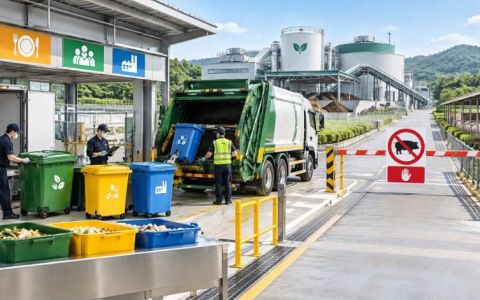
Starting January 1, 2027, Taiwan will prohibit food-waste (swill) feeding in pig farming, accelerating a major transition in organic waste management, animal nutrition and livestock biosecurity.

Animal and Plant Health Management × Food Chain Safety × Environmental and Ecological Monitoring × Prevention and Control of Zoonotic Diseases.
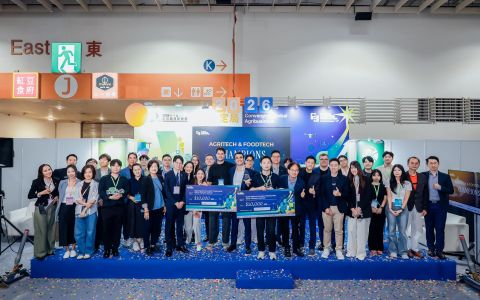
Taiwan and Korea take the AgriTech and FoodTech titles as startups move into overseas trials, partnerships and investment discussions
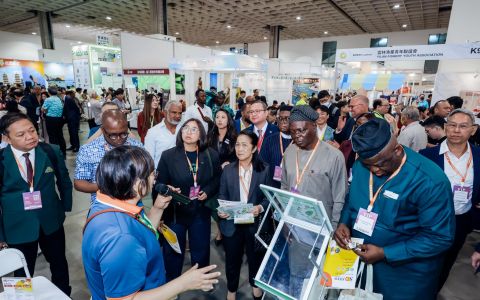
Taiwan Smart Agriweek 2026 concluded on September 10 after three days of international sourcing, technology exchange and business networking.

Taiwan Smart Agriweek 2026 Opens with Focus on Technology, Sustainability and International Business
Taiwan Smart Agriweek 2026 opened today at Taipei Nangang Exhibition Center (TaiNEX) Hall 1, bringing together agribusiness leaders, technology providers, buyers, researchers and policymakers from 69 countries. Under the theme “Converging Global Agribusiness,” the 12th edition features more than 400 exhibiting companies and is expected to welcome over 21,000 professional visitors during the three-day event.

Facing the severe challenges posed by extreme weather to traditional global agriculture, Liangnong Modern Agriculture Technology Co., Ltd. has launched its "Integrated Preventive Agriculture Solutions". The core philosophy of this solution is "prevention is better than cure." It aims to help farmers shift from passive responses to proactive management, reducing production risks while enhancing crop health and production resilience through precise diagnosis, technological monitoring, and environmental early warnings.
KSP_官網Banner廣告__26H14xaLK6.jpg)
Kasetphand operates across Engineering, Technology, and Integrated Solutions for the agro-industrial and food sectors. Built on decades of experience and expertise, our business spans Feed, Farm, Food, and Energy, connecting knowledge, technology, and innovation to deliver solutions that address the entire value chain—from upstream to downstream.
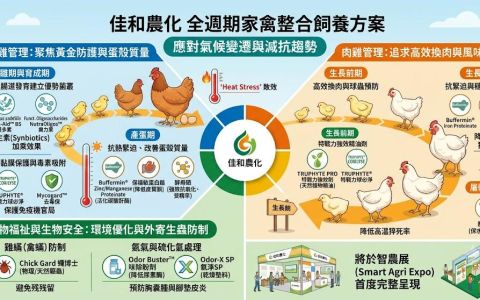
As global climate change intensifies, "heat stress" triggered by high summer temperatures has become a core challenge for the poultry farming industry. Meanwhile, under the dual trends of animal-friendly farming and antibiotic reduction, improving poultry immunity and gut health through precision nutrition has become key to maintaining production efficiency. In response, Jiahe Agrochemical Co., Ltd. (hereafter referred to as Jiahe Agrochemical) has proposed a full-cycle integrated feeding management solution tailored to the distinct physiological needs of layers and broilers, covering the "brooding period, mid-laying/growing stage, and environmental management.