



JH Biotech, Inc. Joins Forces with Agro Greening and Group Gain to Form a New International Model of Prevention Agriculture
At this year’s Smart Agriculture Week, JH Biotech, Inc. (USA) announced its official alliance with two leading Taiwanese agricultural input companies—Agro Greening Modern Agricultural Technology Co., Ltd. and Group Gain Bio-Agri Co., Ltd.—to join the global initiative led by the International Prevention Agriculture Institute (IPAI). Together, the three parties have established a new nonprofit organization in Taiwan, the International Prevention and Smart Agriculture Alliance, aiming to localize R&D, promote field demonstrations, and implement prevention agriculture practices across regions. This marks a critical milestone in building a cross-national, locally rooted strategy for future farming.
Through this collaboration, JH Biotech, Agro Greening, and Group Gain have officially become core members of the IPAI Alliance in the Asia-Pacific region. The partnership will focus on prevention agriculture demonstration fields, trial programs, and educational outreach in Taiwan, Central America, and Southeast Asia.
Toward a Global Prevention Agriculture Alliance: Enhancing Agricultural Resilience
In recent years, IPAI has been committed to establishing a global framework for prevention agriculture, emphasizing three core strategies:
Soil health, Crop immune-nutrition, and Biological pest and disease management.
This new alliance not only strengthens the integration of R&D resources but also marks the first time that localized technologies from Asia have been incorporated into a global prevention agriculture system through a formal alliance structure—a significant step forward.
JH Biotech brings nearly 40 years of experience in crop protection and biostimulant development. AgroGreening specializing in the development of botanical pesticides and dedicated to integrated pest management, while Group Gain specializes in the development and application of biological control materials. Under the coordination of IPAI, the three companies will collaborate on key initiatives including:
- Establishment of prevention agriculture demonstration zones in Taiwan and Central America
- Development of a verification framework aligned with ESG sustainability standards
- Joint product development for region-specific pest and disease risks
- Construction of a shared data platform and localized training programs
Local Action, Global Standards: Bridging Innovation Across Borders
Dr. Hsu Hsin-Hung, President of JH Biotech, stated: "The value of prevention agriculture is not simply replacing pesticides—it’s about offering proactive, site-specific solutions before risks emerge. We are honored to join IPAI with Agro Greening and Group Gain, bringing Asian innovation to a global stage while ensuring real-world impact across diverse farming systems."
Mr. Hsiao Fu-Hou, Manager of Agro Greening, added: "In Taiwan, more farmers are shifting toward preventive crop management, but there is still a lack of systematic frameworks and support networks. As an IPAI partner, we aim to establish a professional advisory team and regional training centers to support practical implementation and on-farm validation."
Mr. Chang Po-Ho, Chairman of Group Gain, emphasized: "Group Gain has dedicated recent years to developing biological pest and disease control products. This partnership elevates our efforts from stand-alone products to integrated, system-based solutions."
From Innovation to Education: Shaping the Future of Sustainable Agriculture
The three partners, in collaboration with IPAI, also announced plans to co-host the Prevention Agriculture Forum starting in 2026 and launch the Journal of Prevention Agriculture, which will serve as a foundational resource for regional training and policy advocacy. Additionally, they will initiate a Prevention Agriculture Youth Training Program to connect universities and local farms, cultivating the next generation of agricultural leaders equipped with risk management insights.
This alliance between JH Biotech, Agro Greening, and Group Gain not only strengthens Taiwan’s role in the global prevention agriculture movement but also demonstrates the dual force of outward linkage and inward cultivation in Taiwanese agri-tech. As climate risks and market demands continue to rise, the formation of this international alliance sets the foundation for a more resilient and sustainable global agricultural future.
Other News

Everything You Need to Cover the Show — All in One Place
Press Releases · Quick Facts · Event Highlights · Press Photos · Media
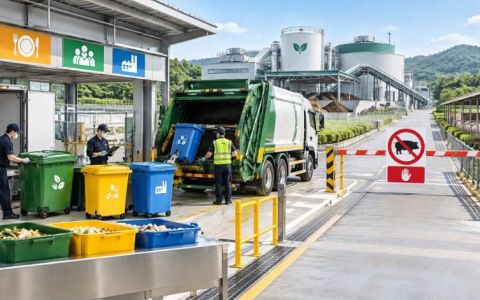
Starting January 1, 2027, Taiwan will prohibit food-waste (swill) feeding in pig farming, accelerating a major transition in organic waste management, animal nutrition and livestock biosecurity.
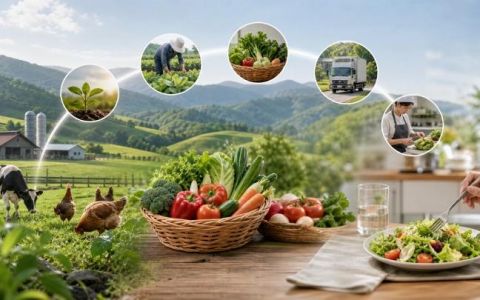
Animal and Plant Health Management × Food Chain Safety × Environmental and Ecological Monitoring × Prevention and Control of Zoonotic Diseases.
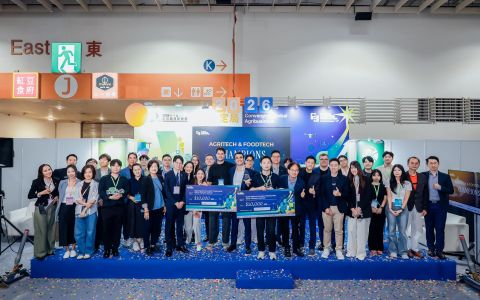
Taiwan and Korea take the AgriTech and FoodTech titles as startups move into overseas trials, partnerships and investment discussions
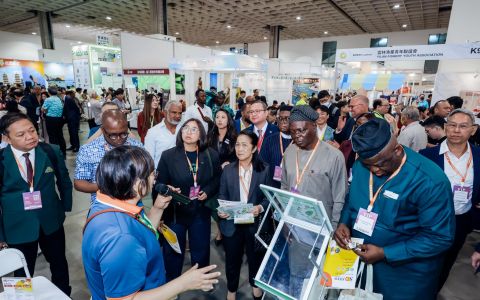
Taiwan Smart Agriweek 2026 concluded on September 10 after three days of international sourcing, technology exchange and business networking.

Taiwan Smart Agriweek 2026 Opens with Focus on Technology, Sustainability and International Business
Taiwan Smart Agriweek 2026 opened today at Taipei Nangang Exhibition Center (TaiNEX) Hall 1, bringing together agribusiness leaders, technology providers, buyers, researchers and policymakers from 69 countries. Under the theme “Converging Global Agribusiness,” the 12th edition features more than 400 exhibiting companies and is expected to welcome over 21,000 professional visitors during the three-day event.

Facing the severe challenges posed by extreme weather to traditional global agriculture, Liangnong Modern Agriculture Technology Co., Ltd. has launched its "Integrated Preventive Agriculture Solutions". The core philosophy of this solution is "prevention is better than cure." It aims to help farmers shift from passive responses to proactive management, reducing production risks while enhancing crop health and production resilience through precise diagnosis, technological monitoring, and environmental early warnings.
KSP_官網Banner廣告__26H14xaLK6.jpg)
Kasetphand operates across Engineering, Technology, and Integrated Solutions for the agro-industrial and food sectors. Built on decades of experience and expertise, our business spans Feed, Farm, Food, and Energy, connecting knowledge, technology, and innovation to deliver solutions that address the entire value chain—from upstream to downstream.
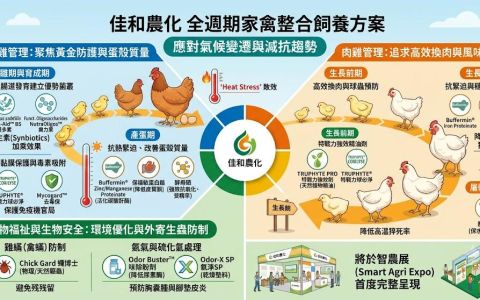
As global climate change intensifies, "heat stress" triggered by high summer temperatures has become a core challenge for the poultry farming industry. Meanwhile, under the dual trends of animal-friendly farming and antibiotic reduction, improving poultry immunity and gut health through precision nutrition has become key to maintaining production efficiency. In response, Jiahe Agrochemical Co., Ltd. (hereafter referred to as Jiahe Agrochemical) has proposed a full-cycle integrated feeding management solution tailored to the distinct physiological needs of layers and broilers, covering the "brooding period, mid-laying/growing stage, and environmental management.