



Taiwan’s New Farming Tech Force: Expanding from Singapore into Southeast Asia
From Island Resilience to Regional Alliances
Taiwan, an island shaped by typhoons, earthquakes, high mountains, and coastal plains, has developed a unique agricultural intelligence under harsh environmental conditions. From alpine vegetables and off-season fruits to precision seedlings and aquaculture techniques, these capabilities have become a recognized soft power in the global market.
Today, these strengths are no longer just in the form of exportable products, but have evolved into modular system platforms that can be replicated, licensed, and integrated.
S+A company leads the charge with its dual-platform solutions—AgriData Machine and BlueData Machine—and is launching a multinational initiative. Its first strategic node: Singapore. From there, it will establish a cooperative platform known as Taiwan’s New Farming Tech Force, designed to expand across Southeast Asia.
Starting from Singapore to Reach All of Southeast Asia
Choosing Singapore is no coincidence. As a land-scarce yet policy-efficient nation, its “30 by 30” food security plan urgently seeks standardized, replicable systems that can be rapidly deployed. S+A modular systems are perfectly suited to plug into this vision.
Moreover, Singapore’s regional influence and financial infrastructure make it an ideal springboard for expanding Taiwanese agri-fishery technologies into Malaysia, Vietnam, Indonesia, Thailand, and beyond. S+A company also plans to establish a technology transfer base in Singapore and is actively seeking international partnerships.
AgriData & BlueData Machines: Platforms for Cross-Border Collaboration
Unlike traditional hardware exports, the AgriData Machine and BlueData Machine are not just machines—they are scalable, adaptable, and integrative data-based modular platforms, enabling:
- Standardized Infrastructure × Flexible Expansion
Whether for leafy greens, berries, herbs, or fish, shrimp, and shellfish—the systems can be quickly configured to match local production conditions. - From Real-Time Monitoring to Output Forecasting × From Fragmented Tech to Systemic Governance
With integrated sensors, utility control (water, electricity, gas), environmental regulation, and growth tracking, the systems are ESG-ready and carbon-trade compatible. - Educational Modules × Youth Engagement × Startup Ecosystem Potential
Taiwan’s agricultural know-how can now be exported as digital systems and consulting services—fostering local innovation and youth-driven entrepreneurship.
S+A company Invites Partners to Join the New Taiwan Farming Tech Force
We don’t sell isolated machines—we deliver modular solutions that ignite transformation and fuel a cross-border agricultural collaboration movement.
S+A company sincerely invites government agencies, industry alliances, academic institutions, and social innovation groups across Singapore and Southeast Asia to co-create a multilateral partnership model. Let Taiwan become the new hub of agricultural innovation, and let Southeast Asia chart its path to food system resilience.
📍 Exhibition Info
• Booth Number: J401
• Company: S+Association Landscape Design Co., Ltd. (AgriData Machine & BlueData Machine)
• Website: https://safarmgroup.com/
• Tel: +886-3-3294151
Other News

Everything You Need to Cover the Show — All in One Place
Press Releases · Quick Facts · Event Highlights · Press Photos · Media
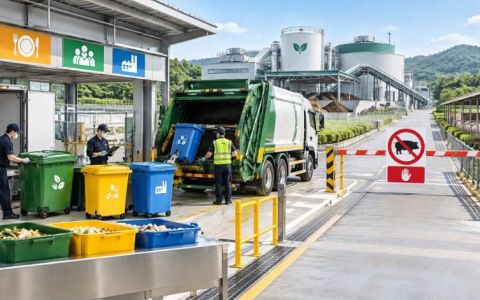
Starting January 1, 2027, Taiwan will prohibit food-waste (swill) feeding in pig farming, accelerating a major transition in organic waste management, animal nutrition and livestock biosecurity.
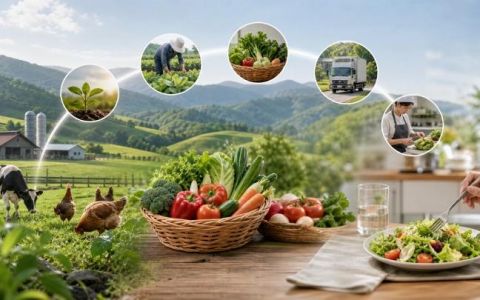
Animal and Plant Health Management × Food Chain Safety × Environmental and Ecological Monitoring × Prevention and Control of Zoonotic Diseases.
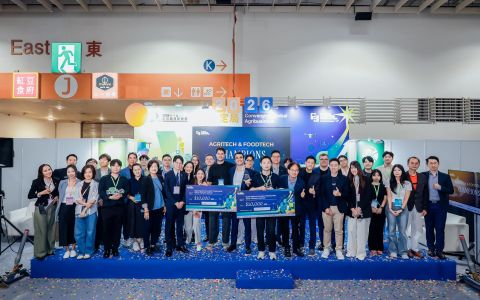
Taiwan and Korea take the AgriTech and FoodTech titles as startups move into overseas trials, partnerships and investment discussions
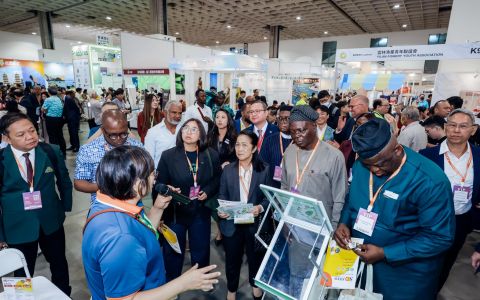
Taiwan Smart Agriweek 2026 concluded on September 10 after three days of international sourcing, technology exchange and business networking.

Taiwan Smart Agriweek 2026 Opens with Focus on Technology, Sustainability and International Business
Taiwan Smart Agriweek 2026 opened today at Taipei Nangang Exhibition Center (TaiNEX) Hall 1, bringing together agribusiness leaders, technology providers, buyers, researchers and policymakers from 69 countries. Under the theme “Converging Global Agribusiness,” the 12th edition features more than 400 exhibiting companies and is expected to welcome over 21,000 professional visitors during the three-day event.

Facing the severe challenges posed by extreme weather to traditional global agriculture, Liangnong Modern Agriculture Technology Co., Ltd. has launched its "Integrated Preventive Agriculture Solutions". The core philosophy of this solution is "prevention is better than cure." It aims to help farmers shift from passive responses to proactive management, reducing production risks while enhancing crop health and production resilience through precise diagnosis, technological monitoring, and environmental early warnings.
KSP_官網Banner廣告__26H14xaLK6.jpg)
Kasetphand operates across Engineering, Technology, and Integrated Solutions for the agro-industrial and food sectors. Built on decades of experience and expertise, our business spans Feed, Farm, Food, and Energy, connecting knowledge, technology, and innovation to deliver solutions that address the entire value chain—from upstream to downstream.
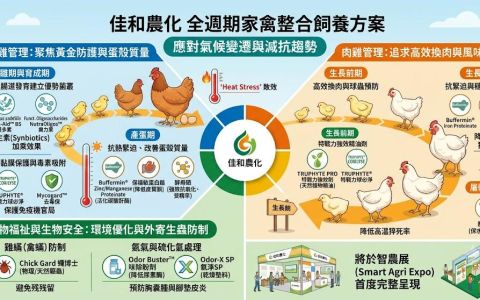
As global climate change intensifies, "heat stress" triggered by high summer temperatures has become a core challenge for the poultry farming industry. Meanwhile, under the dual trends of animal-friendly farming and antibiotic reduction, improving poultry immunity and gut health through precision nutrition has become key to maintaining production efficiency. In response, Jiahe Agrochemical Co., Ltd. (hereafter referred to as Jiahe Agrochemical) has proposed a full-cycle integrated feeding management solution tailored to the distinct physiological needs of layers and broilers, covering the "brooding period, mid-laying/growing stage, and environmental management.